
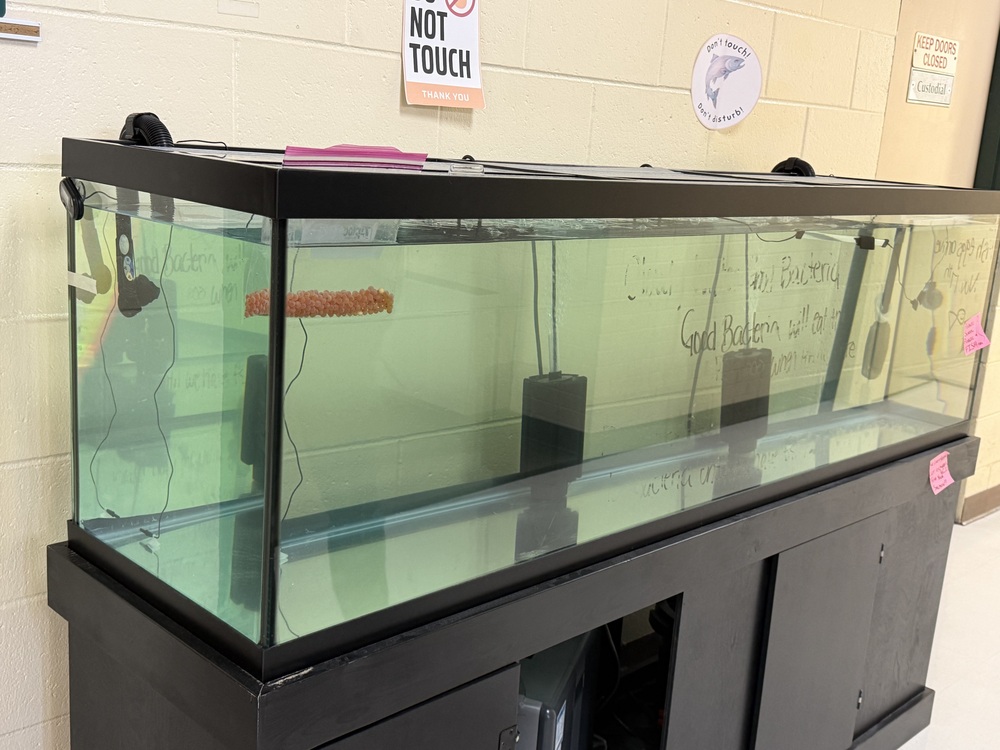
As Biology students in Mrs. Santos's classes move through each Biology unit, students will be making connections between the lessons in class to the Salmon eggs (eventually fish) in the tank.
Prior to the arrival of the Salmon eggs, students started by learning about the organ structures that all fish have as an introduction to living things. They completed a paper model of a fish where they had to identify each organ structure, color it, and put it together in the way that fish organ systems are.
Today, the eggs arrived from Little Manistee Hatchery. They were fertilized and collected on September 30th, so we expect them to begin hatching early next week, with all of them being hatched by the end of Thanksgiving break. The fish will emerge from the shell but will still be attached to the yolk for quite some time. They will hang out at the bottom of the tank, gaining strength and absorbing nutrients from their yolks. Mrs. Santos will pull out a few eggs and a few fry for students to observe them under the stereoscopes and microscopes to identify any features that they are able to see at this stage. They should be able to identify the eyes, spinal cord, and the beginning formations of gills and fins.
The classes will learn about cell growth and differentiation next. Students will watch the fish fry grow through mitosis and develop the different body parts they have through cellular differentiation. We will learn about the timeline of fish development and how the fish went from two types of cells to dozens of specialized cells. We will end the semester with the fry absorbing their yolks and starting to eat food. The students will learn about why they hadn't needed to be fed yet, what the yolk is made of, and what their bodies do with those nutrients when they absorb them. This is when we will talk about cellular respiration.
Our PHS Salmon should start acting and looking like normal fish in January. Stay tuned as our Biology students learn more!